

Blog Post
Gratitude Is a Leadership Skill: Why Recognition Fails — and How to Make It Land
October 13, 2026 / Category: Third Level
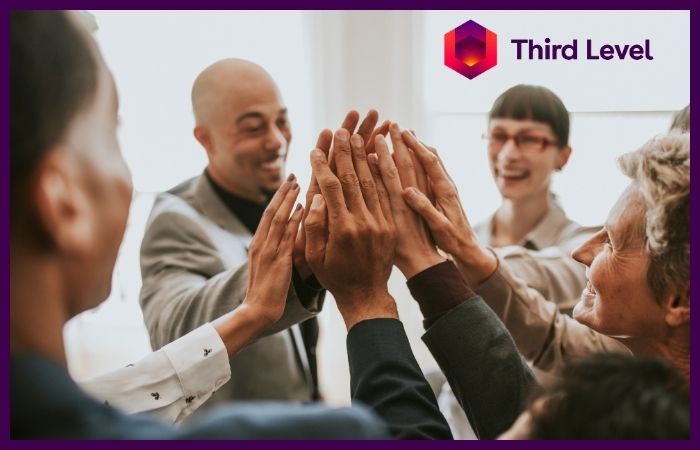
Around this time of year, gratitude gets its annual moment. Thanksgiving toasts. Year-end thank-you notes. The all-hands where leadership says the team is “the real asset.” And then — in most organizations — the moment passes, the machine resumes, and everyone goes back to feeling roughly as seen as they did before.
Here’s the perspective Third Level brings to this season: gratitude in leadership isn’t a sentiment, and it isn’t an event. It’s a skill — one with mechanics, one that most leaders were never taught, and one that measurably changes how teams perform. Practiced well, it’s among the most powerful tools a leader owns. Practiced badly, it’s worse than nothing.
Why Most Recognition Falls Flat
Think of the recognition you’ve received that meant nothing — and the one moment, maybe years ago, that you still remember. The difference between them is almost never sincerity. It’s specificity and understanding.
Generic praise reads as processing, not seeing. “Great job, everyone” costs nothing and lands like it. Teams metabolize it instantly as ritual.
Recognition aimed at outcomes misses the person. Praising the closed deal ignores the judgment calls, the recovered mistake, the unglamorous grind that produced it. People don’t feel valued for their results; they feel valued when someone noticed how they did it.
Delayed gratitude compounds at zero percent. Saved up for the annual review, appreciation loses nearly all its power. Recognition is a perishable good.

The Mechanics of Recognition That Lands
Third Level’s work with leadership teams keeps arriving at the same practical core:
Be specific or be silent. “The way you handled the client’s pushback on Tuesday — staying curious instead of defensive — changed the whole outcome.” That sentence proves you were paying attention. Attention is the actual gift.
Name the quality, not just the act. Connecting what someone did to who they are — “that’s the kind of judgment this team runs on” — tells people their character has a place here. That’s what retention actually feels like from the inside.
Deliver it in the person’s currency. Some people flourish in public shout-outs; others are mortified by them and treasure a quiet word or a thoughtful note. Leaders who notice the difference double the impact.
Make it a cadence, not a campaign. The season can be the trigger to start — but the practice is weekly, not annual. Small, real, frequent recognition outperforms the year-end grand gesture by a mile.
The Team-Culture Multiplier
Here’s where this stops being a nice-to-have: gratitude practiced by leaders becomes gratitude practiced between teammates — and that changes how conflict, feedback, and pressure move through a team. People who feel genuinely seen extend more good faith, surface problems earlier, and recover from friction faster. In Third Level’s language, that’s the deeper level of teamwork where performance actually lives — beneath process, in how people relate.
That’s also why this is squarely leadership-development territory. Recognition that lands requires the same muscles as every other advanced leadership skill: attention, emotional intelligence, and the courage to be personal. Skills, not traits — which means they can be built.

Frequently Asked Questions
Isn’t team recognition just a morale nicety? No — felt appreciation consistently tracks with engagement, retention, and discretionary effort. It’s one of the cheapest performance levers a leader has.
What if recognition feels awkward or forced for me as a leader? That’s common, and it’s exactly why it’s a skill to develop rather than a personality trait to wish for. Start small, specific, and private.
How do I recognize a struggling team member honestly? Find the true thing — effort, improvement, a specific good decision — and name only that. Honest specificity builds trust; inflation destroys it.
How does Third Level work on this with leadership teams? Recognition, feedback, and trust-building sit inside Third Level’s broader leadership development work — practical, human-dynamics-first, and built for real teams under real pressure.
Make This the Season Your Team Actually Feels It
Gratitude that lands is a skill. Third Level teaches it — along with the rest of the leadership toolkit that turns groups into genuine teams.
Do you want your leaders and teams to perform consistently at an elite level? Need to solve major problems quickly? If the answer is ‘yes’, then take a few minutes right now to discover more about who we are, who we serve, and our proven methodologies.
Companies rely on our experience and knowledge to help them solve important problems in this time of continuous and complex transformations. Our human solutions help our customers work more efficiently and effectively. And more profitable.
Success in business comes from people working successfully together as teams.
We’ve helped companies around the world achieve just that.
Explore leadership development with Third Level: https://thirdlevel.com/leadership-development/
Email Third Level: Info@ThirdLevel.com
Follow Third Level on Instagram: @ThirdlevelTeams